By Henry Daunert, Founder and CEO · On Value Technology
As per recent doubts and volatility in financial markets about the sustainability of AI Neoclouds' fast growth, here goes some data and facts that will bring clarity to the current situation.
The AI business fundamentals seem perfectly well in place. Moreover, AI technology demand outlook is extremely strong across Language Training Models, Inference, AI on-device, and related workloads.
Contracts ahead of Capex
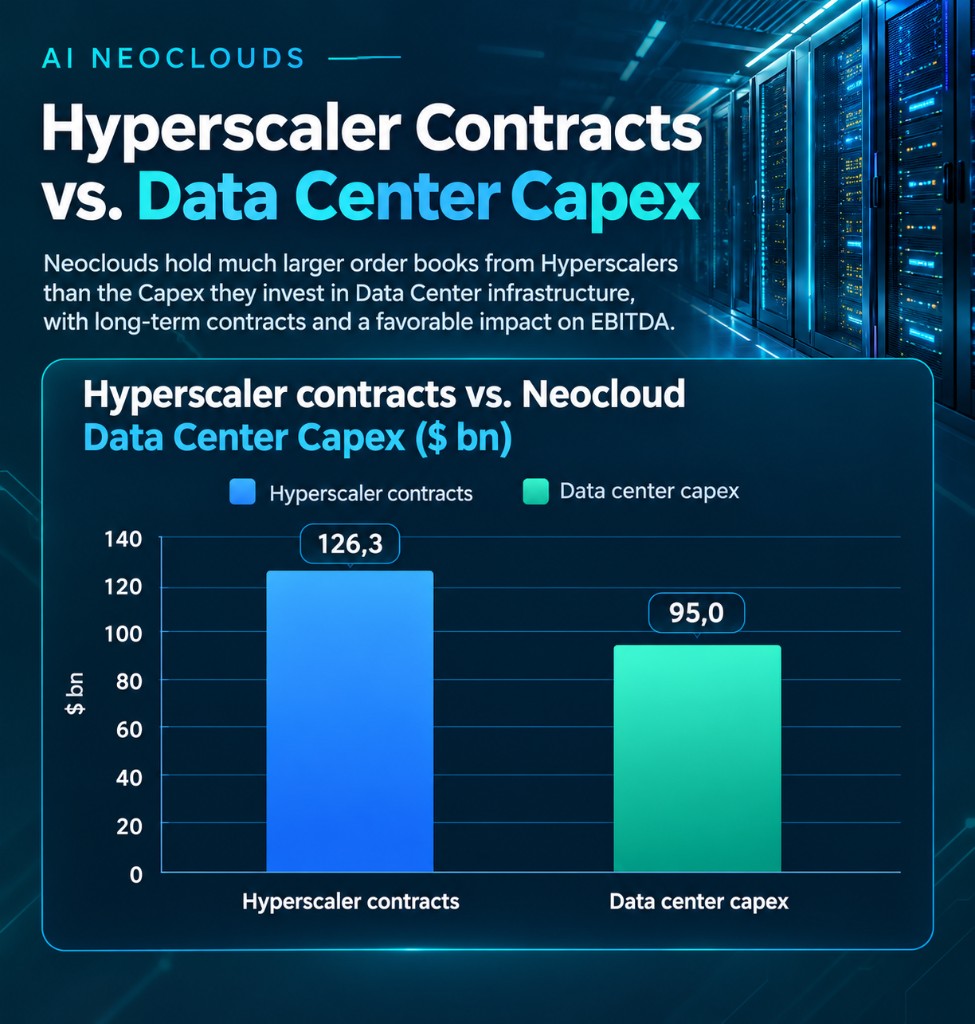
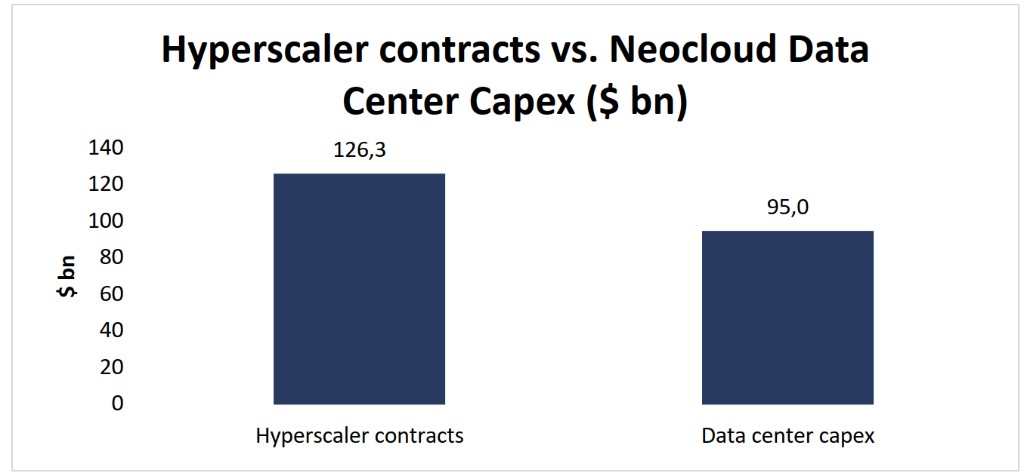
Neoclouds hold much larger order books—mainly from Hyperscalers (investment grade)—than the Capex they invest in Data Center infrastructure. Aggregate Hyperscaler contracts of about $126.3 bn sit above high-end Data Center Capex of about $95.0 bn.
Across CoreWeave, Nebius, IREN, and Nscale, contracted Hyperscaler demand typically sits at or above high-end Capex estimates—evidence that order books are already backing infrastructure investment.
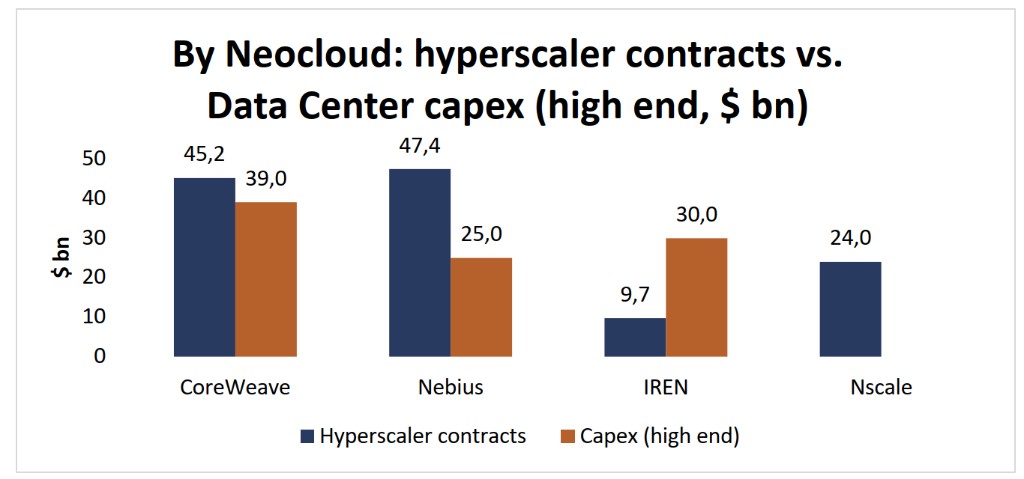
| Neocloud | Hyperscaler contracts ($ bn) | Capex high end ($ bn) |
|---|---|---|
| CoreWeave | 45.2 | 39.0 |
| Nebius | 47.4 | 25.0 |
| IREN | 9.7 | 30.0 |
| Nscale | 24.0 | — |
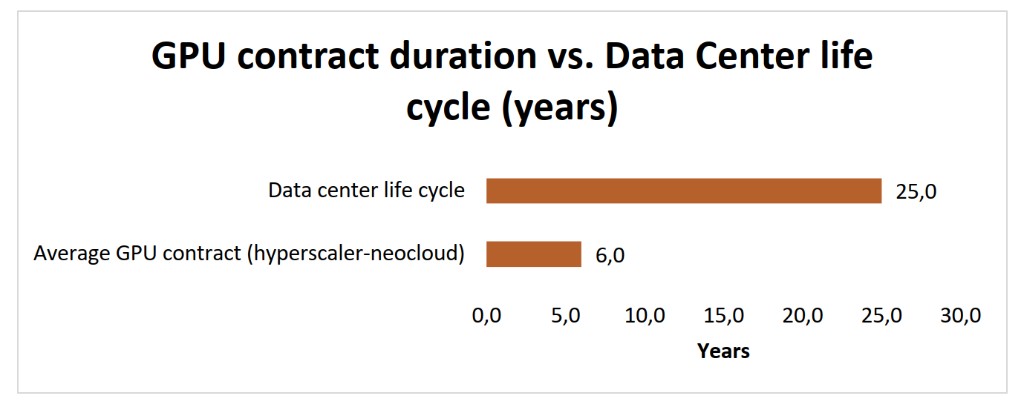
A significant part of this Capex has a life cycle of 10+ years and some assets up to 25 years, while average GPU contracts with Hyperscalers run around 6 years—so Capex impact on EBITDA is moderated by longer depreciation cycles.
Build cycles reduce bubble risk
The long time it takes to build and put a Data Center into service (around 3 years for an initial phase, and up to 7 years to reach full capacity), driven by permitting and power supply availability from TSOs, is a de-risking factor for those who fear an oversupply bubble.
Anyone in the AI business looking for available Data Center capacity today really struggles. Adoption of prefabricated Data Center solutions, hybridization of multiple energy sources, and microgrids will shorten time to market, improve IRRs, and raise capital efficiency.
Healthy margins and demand outlook
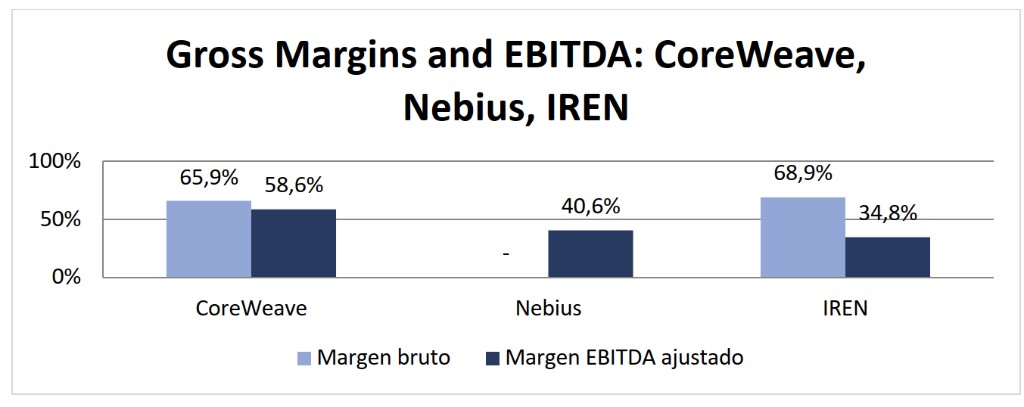
Neoclouds report extremely healthy gross margins and EBITDAs. CoreWeave, for example, shows gross margin near 66% and adjusted EBITDA margin near 59%; peers such as Nebius and IREN also report strong adjusted EBITDA margins.
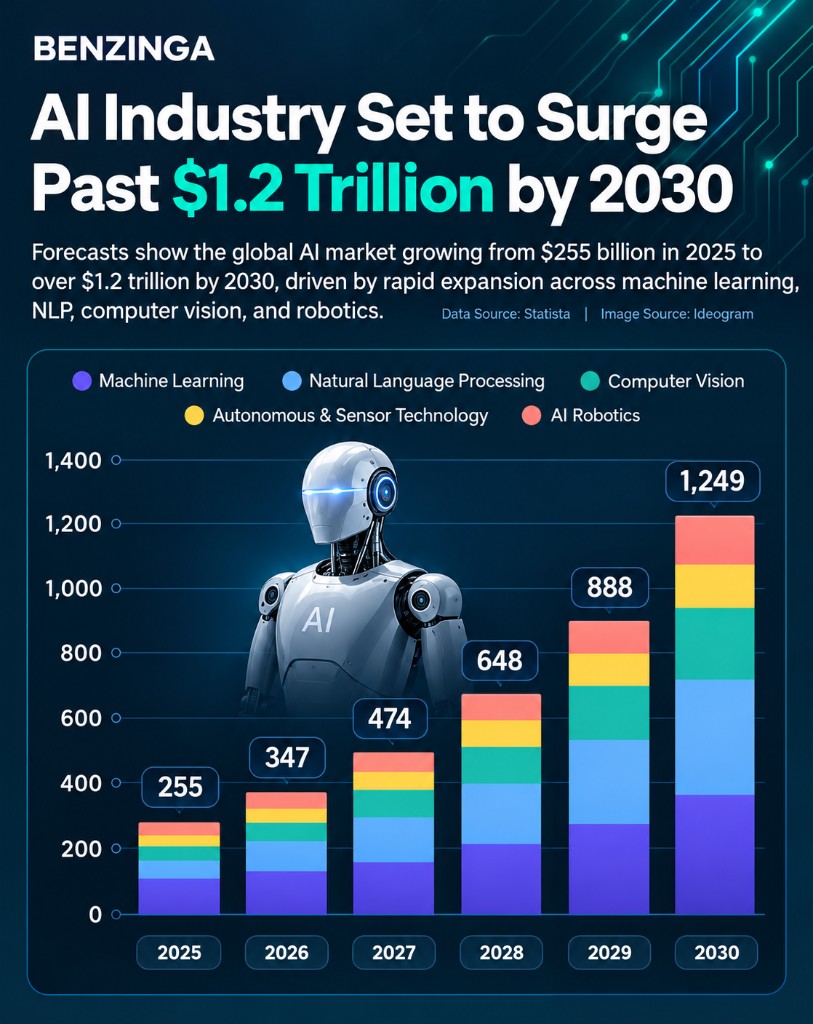
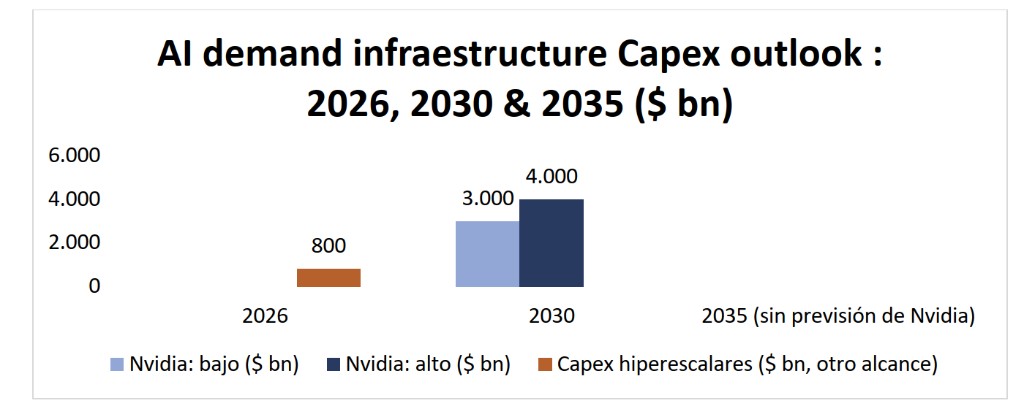
Demand outlook for the next 5 years looks extremely strong—with forecast growth around 4x. AI infrastructure Capex scenarios point from roughly $800 bn in 2026 Hyperscaler scope toward Nvidia-linked ranges of $3–4 tn by 2030.
At the end of the day, AI demand is poised to grow exponentially as AI is adopted across financial services, pharma, education, healthcare, industry, agriculture, transportation, and more. Much of that runs on GPUs within a Data Center or device environment, largely operated by Neoclouds.
Conclusion
In the AI market where demand growth is so strong, despite possible financial bumps that will eventually be fixed, data indicates that Neoclouds have—and will keep—very strong tailwinds. Financial markets should take a longer-term view and focus on AI fundamentals: real demand from solid customers, and healthy margins.